
Proton Mail Free: A Private Swiss Inbox at $0 — and Where the 1 GB Ceiling Bites
One-line takeaway: Proton Mail Free gives you a genuinely private inbox for $0 — end-to-end encryption between Proton users, zero-access storage, no ads — but it caps you at 1 GB, one address, and no custom domain or desktop-client bridge. Open it as a second, private inbox first; promote it to your main inbox only after you have checked those three limits.
What you need
- A backup email address for verification during sign-up
- A strong password plus a recovery method you actually store somewhere safe: with zero-access encryption, a lost password with no recovery means the mailbox contents are gone for good
- Realistic expectations: this is a privacy inbox, not a bulk-mailing tool or a file archive
Steps
Step 1: Check the pricing page and confirm what Free really includes
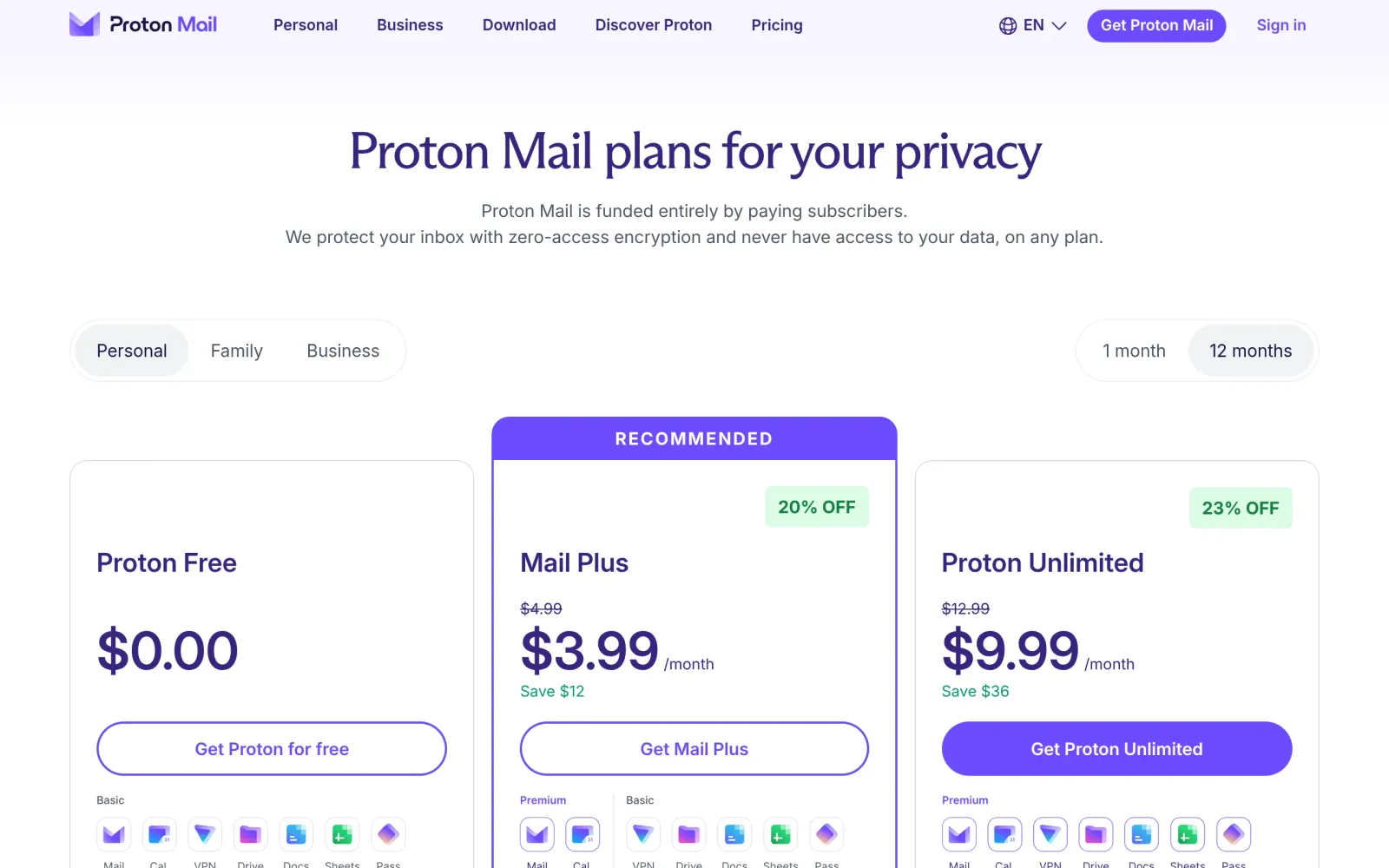
Open Proton Mail's pricing page. Proton Free is $0.00 with no card required. On the same page, Mail Plus is $3.99/month billed annually ($4.99 monthly) and Proton Unlimited is $9.99/month billed annually ($12.99 monthly). The paid tiers buy storage, addresses, and custom domains — not better encryption. Proton's position is that the free plan gets the same zero-access protection as paid plans.
Step 2: Verify the hard limits before you import anything
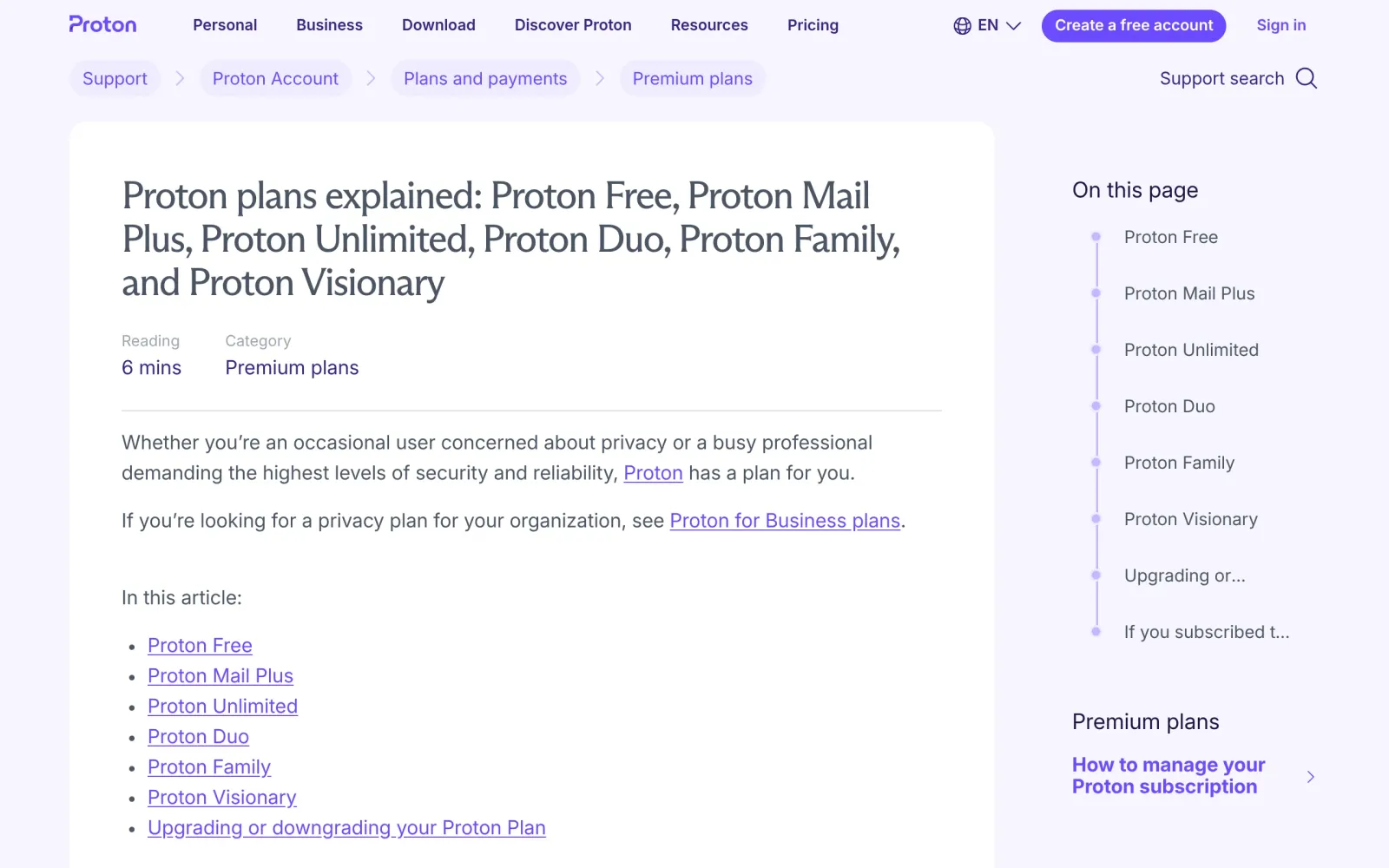
Per multiple third-party checks in October 2026 (the pricing page itself lists prices, not every fine-print limit), the free plan's key numbers are:
- 1 GB of storage: starting at 500 MB, expandable to 1 GB by completing the get-started checklist (third-party wording, within the first 18 days)
- One address, with a @proton.me or @pm.me suffix
- A 150-message-per-day sending limit (third-party October 2026 figure; some pages say unlimited — this guide uses the stricter number, which is plenty for personal use and too small for newsletters)
- 25 MB attachments
- No custom domain, no Bridge (so no IMAP/SMTP in Outlook, Thunderbird, or other third-party clients), and only around 3 folders and labels
Do the storage math first: 1 GB will not hold years of Gmail history. Check the size of your old mailbox before using Easy Switch to import everything.
Step 3: Sign up, then immediately set up two-factor authentication and recovery
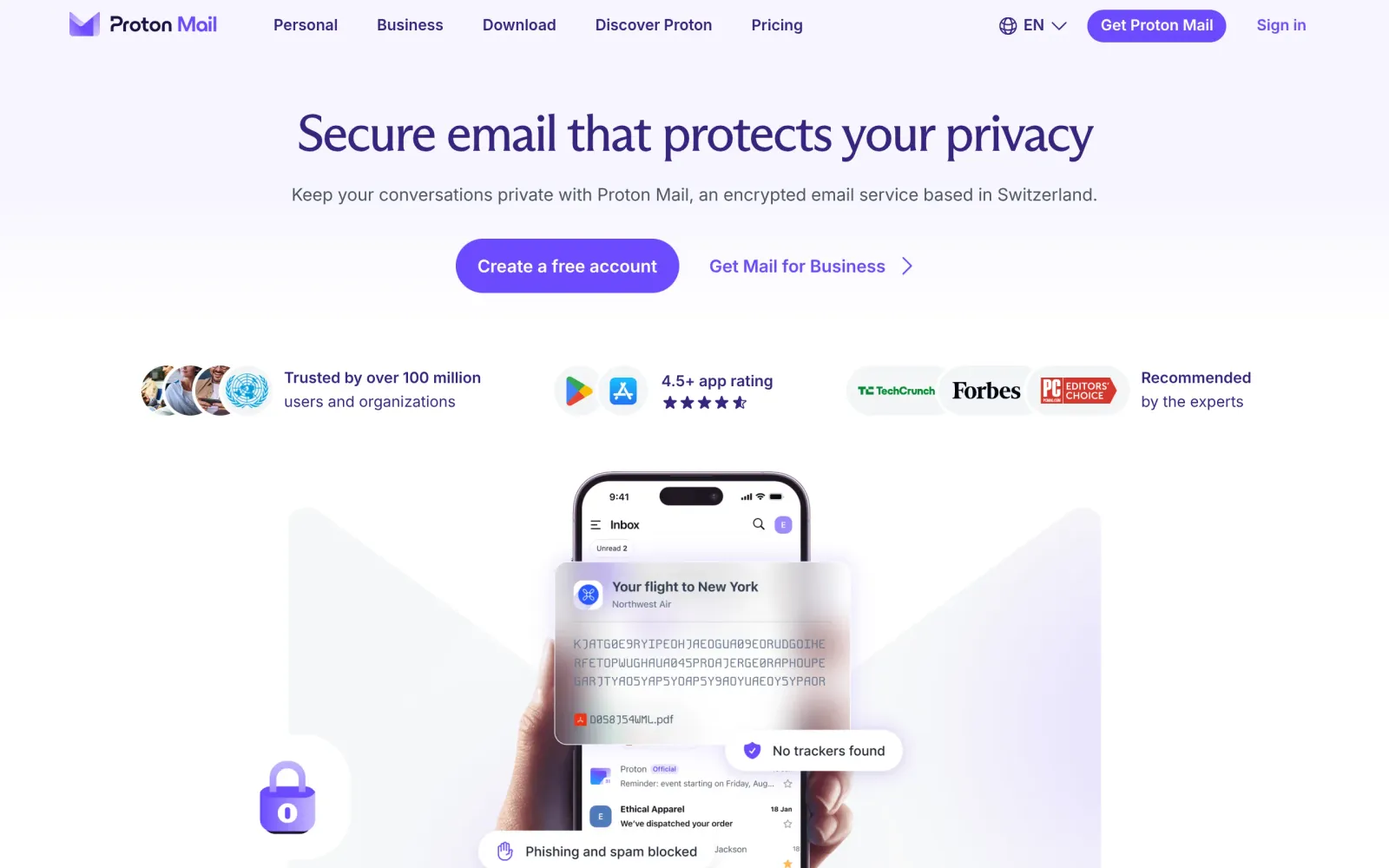
From the homepage, choose Get Proton Mail, pick a username, set a password, and complete verification. Before sending anything important, do two things: turn on two-factor authentication (authenticator app or hardware key), and save your recovery method (recovery email or recovery file, whichever sign-up offers you) in a password manager. Mail between Proton users is automatically end-to-end encrypted; mail to Gmail and other outside inboxes is not end-to-end by default — for that you need a password-protected message or PGP on the recipient's side.
Notes, costs, and pitfalls
- Cost: Free is $0; Mail Plus is $3.99/month annually or $4.99 monthly; Unlimited is $9.99/month annually or $12.99 monthly. Prices are as shown on the pricing page on 2026-10-29.
- Proton vs. Tuta: Tuta encrypts even the subject line end-to-end; Proton encrypts subject lines with zero-access encryption only, not end-to-end (to stay compatible with the OpenPGP standard). Keep sensitive details out of subject lines. In return, Proton's ecosystem is broader: one account covers Calendar, Drive, and Pass basics.
- Track record: Proton has operated since 2014 with no public record of mass account closures, stealth charges, or sudden shutdowns. It funds the free plan from subscriptions, not advertising — a healthier model than "free but sells your data." Swiss jurisdiction is a real advantage, not an absolute guarantee.
- Pitfalls: ① Do not use the free plan for bulk sending — 150 messages a day is the ceiling. ② A forgotten password with no recovery method means permanent loss. Save recovery on day one. ③ Some services reject lesser-known email domains, so keep a mainstream address for critical accounts and migrate gradually.
Sources
- Proton Mail pricing: https://proton.me/mail/pricing
- Proton plan documentation: https://proton.me/support/proton-plans
- Proton Mail homepage: https://proton.me/mail
- October 2026 third-party checks (1 GB, 150/day, 25 MB, no Bridge): https://paulobrien.com/proton-mail-review-2026-privacy-real-trade-offs/ , https://www.anygen.io/showcase/proton-mail/index.html
- Proton vs. Tuta comparison (subject-line encryption): http://pandromeda.com/security/proton-mail-vs-tuta-which-encrypted-email-should-you-use-in-2026